
Introduction
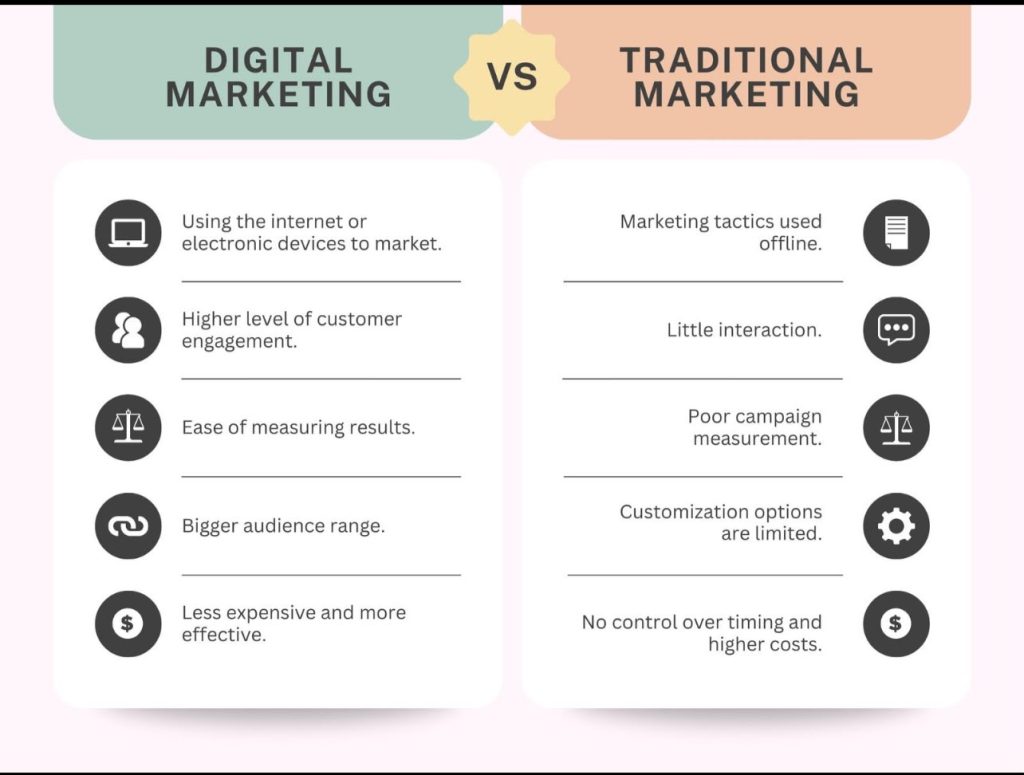
In today’s competitive business world, choosing the right marketing strategy is essential for success. Many businesses compare Digital Marketing vs Traditional Marketing to decide which method can help them reach more customers and increase sales. While traditional marketing has been used for decades through newspapers, television, radio, magazines, and billboards, digital marketing uses online platforms such as search engines, social media, websites, email, and mobile apps.
Understanding Digital Marketing vs Traditional Marketing helps businesses make better marketing decisions based on their goals, budget, and target audience. Digital marketing offers measurable results, advanced targeting, and cost-effective campaigns, while traditional marketing focuses on mass reach and building local brand awareness.
In this guide, you will learn the key differences between Digital Marketing vs Traditional Marketing, along with their advantages, disadvantages, and which marketing approach is best for modern businesses.
Understanding the differences between digital marketing and traditional marketing can help businesses choose the right strategy for their goals. To learn more about my background and digital marketing journey, visit my About Me page.
What Is Digital Marketing?
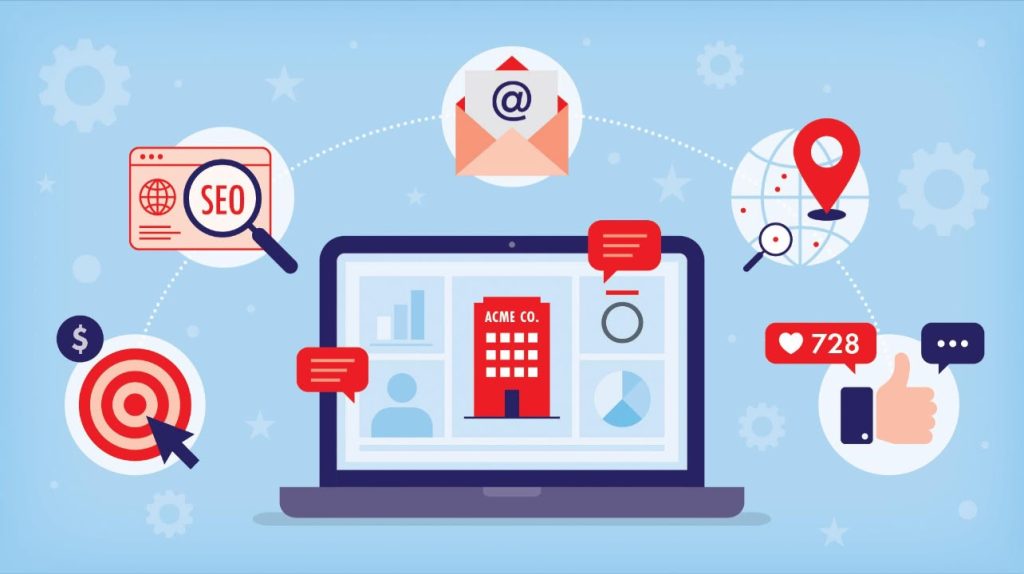
Digital marketing is the promotion of products or services using online channels such as search engines, websites, social media platforms, email, and paid advertisements. Businesses use digital marketing to connect with their target audience, increase brand awareness, generate leads, and improve sales. Digital marketing allows businesses to measure their campaign performance using tools such as Google Analytics.
Popular digital marketing methods include:
* Search Engine Optimization (SEO)
* Social Media Marketing (SMM)
* Content Marketing
* Email Marketing
* Pay-Per-Click (PPC) Advertising
* Affiliate Marketing
One of the biggest advantages of digital marketing is that businesses can track campaign performance in real time. Tools like Google Analytics help marketers measure website traffic, conversions, and customer behavior, making digital marketing highly effective for businesses of all sizes.
What Is Traditional Marketing?
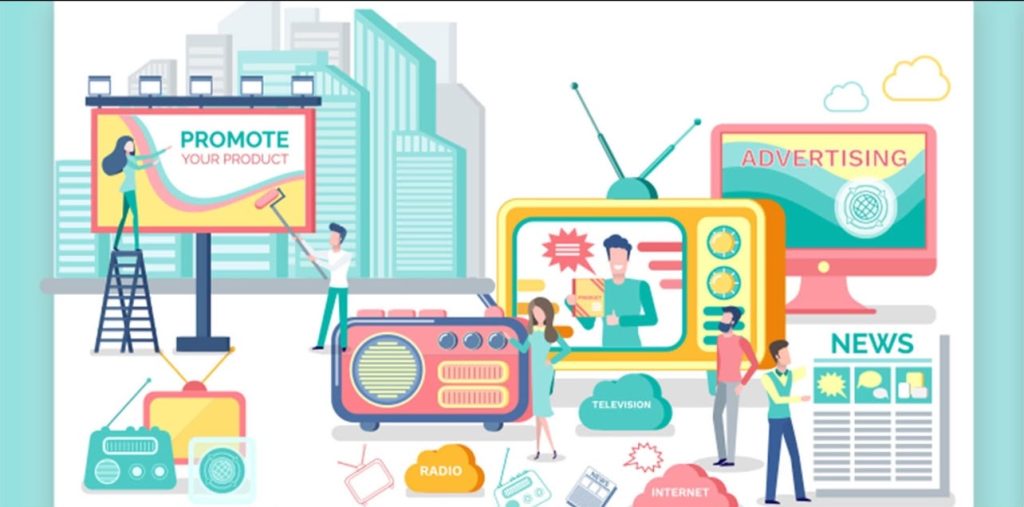
Traditional marketing refers to offline marketing methods used to promote products and services. These methods include television advertisements, radio commercials, newspapers, magazines, brochures, flyers, billboards, and direct mail.
Traditional marketing is especially useful for reaching local audiences and people who may not spend much time online. It can help businesses build trust and create strong brand recognition in specific locations.
However, compared with digital marketing, traditional marketing is often more expensive and offers limited options for tracking campaign performance or targeting specific customer groups.
Digital Marketing vs Traditional Marketing: Key Differences
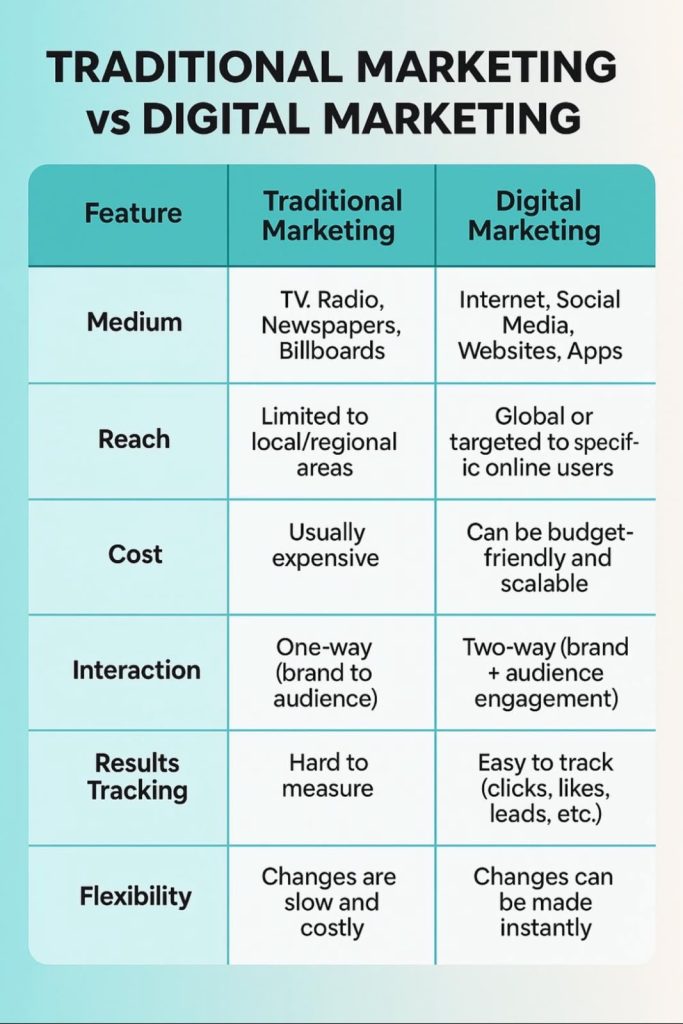
Understanding the differences between Digital Marketing vs Traditional Marketing helps businesses choose the right marketing strategy based on their goals, budget, and target audience. Below are the major differences between these two marketing approaches.
1. Audience Reach
One of the biggest differences in Digital Marketing vs Traditional Marketing is audience reach. Digital marketing allows businesses to reach customers across the world through websites, search engines, and social media platforms. Traditional marketing mainly targets local or regional audiences through newspapers, television, radio, and billboards.
2. Cost
Digital marketing is generally more affordable than traditional marketing. Small businesses can start with a limited budget and still achieve good results using SEO, content marketing, or social media marketing. Traditional marketing usually requires a higher investment for TV commercials, newspaper advertisements, or billboard campaigns.
3. Targeting
Digital marketing offers advanced audience targeting. Businesses can reach people based on age, location, interests, online behavior, and purchasing habits. In Digital Marketing vs Traditional Marketing, traditional marketing has limited targeting options because advertisements are shown to a broad audience.
4. Measurable Results
A major advantage of digital marketing is the ability to measure campaign performance. Businesses can track website traffic, clicks, conversions, and return on investment (ROI) using analytics tools. Traditional marketing makes it much harder to accurately measure campaign success.
5. Customer Engagement
Digital marketing encourages two-way communication. Customers can like, comment, share, review, or send direct messages through social media and websites. Traditional marketing is mostly one-way communication, where businesses share information without immediate customer interaction.
6. Flexibility
Digital marketing campaigns can be updated or paused at any time based on performance. Traditional marketing campaigns are difficult and expensive to modify once they are published or broadcast.
7. Return on Investment (ROI)
When comparing Digital Marketing vs Traditional Marketing, digital marketing often provides a higher ROI because businesses can optimize campaigns using real-time data and focus their budget on strategies that deliver the best results.
Advantages of Digital Marketing
Digital marketing has become one of the most effective ways for businesses to promote their products and services. When comparing Digital Marketing vs Traditional Marketing, digital marketing offers several advantages that help businesses grow faster and reach the right audience.
Cost-Effective Marketing
Digital marketing is affordable for businesses of all sizes. Small businesses and startups can use SEO, social media marketing, and email marketing to promote their brand without spending a large budget.
Better Audience Targeting
One of the biggest strengths of digital marketing is precise audience targeting. Businesses can target customers based on location, age, interests, online behavior, and purchasing habits, making campaigns more effective.
Real-Time Performance Tracking
Unlike traditional marketing, digital marketing provides real-time insights. Businesses can track website traffic, clicks, conversions, and campaign performance using tools like Google Analytics, allowing them to make data-driven decisions.
Higher Customer Engagement
Digital marketing allows businesses to interact directly with customers through social media, email, websites, and online reviews. This helps build trust, improve customer relationships, and increase brand loyalty.
Advantages of Traditional Marketing
Although digital marketing is growing rapidly, traditional marketing still has several benefits.
Strong Local Brand Awareness
Traditional marketing works well for businesses targeting local customers. Newspaper ads, radio commercials, flyers, and billboards can effectively reach people within a specific area.
Builds Trust and Credibility
Many customers consider advertisements in newspapers, television, and magazines more trustworthy because these channels have been used for many years.
Effective for Offline Audiences
Traditional marketing is useful for reaching people who are less active online, including some older audiences and customers in areas with limited internet access.
Which Marketing Strategy Is Better?
There is no single answer to the Digital Marketing vs Traditional Marketing debate because the best choice depends on your business goals, target audience, and budget.
If your goal is to reach a global audience, measure campaign performance, generate leads, and achieve a better return on investment, digital marketing is usually the better option. On the other hand, if your business focuses on a local market or wants to reach offline audiences, traditional marketing can still be effective.
Many successful businesses use a combination of both digital and traditional marketing. This integrated approach helps maximize brand awareness, reach different customer groups, and improve overall marketing results.
Conclusion
Choosing between Digital Marketing vs Traditional Marketing depends on your business objectives, target audience, and available budget. Both marketing methods have unique strengths and can help businesses achieve different goals.
Digital marketing is ideal for businesses looking to reach a wider audience, track campaign performance, generate quality leads, and achieve a higher return on investment. Its ability to target specific audiences and measure results in real time makes it a powerful marketing strategy in today’s digital world.
Traditional marketing, however, continues to be valuable for businesses that want to build local brand awareness and connect with customers through offline channels such as television, newspapers, radio, and billboards.
When comparing Digital Marketing vs Traditional Marketing, many businesses find that combining both strategies delivers the best results. By using digital marketing for online engagement and traditional marketing for local visibility, businesses can create a balanced marketing strategy that supports long-term growth.
Ultimately, understanding the differences between Digital Marketing vs Traditional Marketing helps businesses make informed decisions and choose the marketing approach that best meets their needs.